
Non-lethal is More Common, but Less Lethal is More Accurate
There are psychological and physiological complexities involved in using lethal force. Research by Lt. Col. Dave Grossman in his book On Killing, shines light on the innate aversion humans have to killing. Societal, cultural, moral and religious norms contribute to this aversion, creating a reluctance to use lethal force even in life-threatening situations. Understanding these psychological realities is part of choosing the right self-defense tools.
There is no force option that is completely non-lethal. The term, “less-lethal,” simply emphasizes that certain tools are designed to minimize the likelihood of causing lethal harm rather than eliminating it. According to the U.S. National Institute of Justice, "Less-lethal weapon" means "any apprehension or restraint device that, when used as designed and intended, has less potential for causing death or serious injury than conventional police lethal weapons." (congress.gov)
Intermediate force capabilities can reduce casualties, improve operational effectiveness, and prevent moral injury among soldiers by providing accessible options that allow for force escalation and de-escalation without solely relying on lethal means. The development of prototype-directed energy capabilities provides a variety of counter personnel and materiel effects without destruction.
According to the National Institute of Justice, there are seven types of less lethal device technologies:
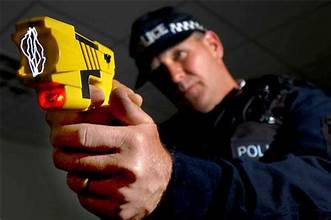
Electroshock: Tasers and stun guns deliver high-voltage electrical shocks (disrupt muscle control and cause disorientation).
Kinetic Energy Projectiles: Rubber bullets, bean bag rounds, and plastic bullets fired from launchers (blunt force trauma, creating pain and compliance without penetration).
Launchers: projectiles filled with pepper powder (PAVA) or impact agents (provide distance).
Directed Energy and Acoustic : Military-grade, non-lethal technologies like Active Denial Systems or acoustic hailers (crowd control and vehicle stopping-- disorientation/drawing attention without contact).
Impact and Defensive : Collapsible batons, tactical pens, and Kubotans (physical force).
Chemical Irritants and Launchers: Concentrated capsaicin (pepper spray) or other chemicals to cause temporary blindness and respiratory distress.
|
Tool |
Effective Range |
Requires Close Contact |
Key Advantages |
Key Limitations |
|
Pepper Spray |
Distance deployment |
No |
Compact, can temporarily incapacitate, may allow escape |
Risk of indirect exposure, indoor contamination |
|
PepperBall TCP |
Up to 150 feet |
No |
Extended range, pistol-style platform |
Requires separate projectiles, larger platform |
|
Taser |
Up to 25 feet |
No |
Distance engagement, electrical incapacitation |
Probes must properly contact target, difficult to reload |
|
Stun Gun |
Contact distance |
Yes |
Compact, electrical deterrence |
Must be held in place, requires proximity |
|
Baton |
Arm’s length |
Yes |
Can generate sufficient stopping force |
Bulky, requires strength and training |
|
Kubaton |
Arm’s length |
Yes |
Small, easy to carry, pain compliance potential |
Requires close contact |
|
Knife |
Arm’s length |
Yes |
Widely available, difficult to disarm |
Requires proximity, legal variability |
Each tool is designed to mitigate harm while allowing law enforcement to gain control over a situation. While less likely to be fatal, a less lethal weapon still poses risks of injury. Their effectiveness depends on proper usage and distance.
Proper training and awareness of local laws regarding their carriage are essential, especially in schools and government buildings. Legality varies significantly by state and local jurisdiction. Always verify local laws regarding canister size for pepper spray or permit requirements for electronic devices before purchase.
When selecting a less-lethal weapon, consider factors like legal restrictions, personal comfort and training requirements. The best non-lethal self-defense option is the one you understand, can legally carry and are properly trained to use. Each less-lethal weapon offers tradeoffs, and the best choice will vary based on distance, environment and personal readiness.
Less-lethal weapons may not replace the effectiveness of a loaded firearm, but they provide practical self-defense options in situations where deadly force isn’t legal or does not align with personal values.
Sources:
https://www.virtra.com/non-lethal-vs-less-lethal/
https://www.thedefensepost.com/2024/08/26/afghanistan-evacuation-intermediate-force/