
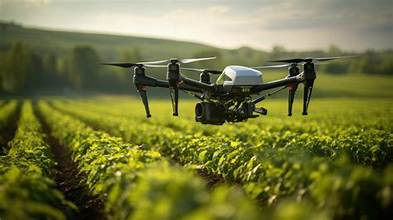
A drone is simply a type of aircraft that is autonomously operated by onboard computers or controlled remotely by a human operator. They have rapidly become more advantageous, affordable and accessible. Each drone has a unique design, capability, and purpose. Their adaptability makes them suitable for numerous tasks in diverse industries.
Formerly only used in specialized areas of the military, these sophisticated devices are now a growing part of commercial applications that are promoting new opportunities in the industrial world.
Drones come in a variety of types; each designed for a different purpose.
- Consumer Drones: Quadcopter or hexacopter used for photography, racing, and recreational flight. Typically lightweight, affordable, and equipped with cameras.
- Commercial Drones: Used by businesses for surveying land, mapping construction sites, or monitoring crops. More powerful and equipped with high-resolution cameras, thermal sensors, or LiDAR technology to capture precise data.
- Industrial Drones: Used for inspecting oil rigs, conducting search and rescue missions, or delivering heavy payloads. Larger, more robust, and can carry a variety of sensors, making them suitable for complex, high-stakes operations.
- Military Drones: The first used drone appeared in 1935 as a full-size retooling of the de Havilland DH.82B Queen Bee biplane. Today’s military drones are equipped with high-tech sensors, cameras, and weapons systems. The Ukrainian war is one of the first modern examples of how drones are being used in active warfare for gathering intel and bombing targets.
Drones provide a wide variety of commercial uses and have been transformed into indispensable tools for many industries.
With the ability to capture stunning aerial footage, drones have become favored among filmmakers, photographers, and real estate agents. Cinematographers can now capture dynamic, high-quality footage at a fraction of the cost of traditional methods. Videographers can capture immersive videos for virtual reality applications. Sports broadcasts are brought to life during races, games, and extreme sporting events.
Farming practices are optimized through thermal camera and multispectral imaging. This helps assess crop health, monitor livestock and irrigation systems, plus spray crops with fertilizers and pesticides.
Drones used for property surveillance, monitor construction sites, and secure critical infrastructure like pipelines, power grids, and communication towers. They measure distances, create 3D maps, and track progress. They reduce workplace injuries and fatalities by taking over tasks that would traditionally be dangerous for humans.
Drones offer a faster and cost-effective method for deliveries, particularly in rural areas. They currently deliver life-saving medications, blood, and vaccines to remote or disaster-stricken areas.
Drones are invaluable to environmental conservation. They collect important ecological data by monitoring wildlife, forest health, and bodies of water. They are used to monitor environmental changes, detect pollution, and study climate patterns with greater precision and less environmental disturbance. They help in the process of reforestation by carrying out aerial seeding and planting trees in areas that are hard to reach on foot. Thermal imaging drones can detect illegal activities such as poaching, logging, and fishing in protected areas.
Drones aid first responders, particularly in disaster-stricken areas because they can easily reach difficult or dangerous places, which makes them essential in locating missing people or assessing damage. They play a key role in wildfire management by providing real-time data to firefighters. Law enforcement agencies use drones for monitoring crowds, tracking suspects, and gathering intelligence. Drones are used in tactical operations, where they offer real-time video feeds to guide ground missions.
The influence of drones on the industrial landscape is effectively changing the workforce. The global drone market is rapidly expanding, projected to grow 38% annually through 2030, fueling new employment opportunities.
Many workers in routine and low-skill jobs will be at risk of displacement. The good news is that for every job loss, up to two new roles may be created. Workers can adapt by upskilling, earning certifications, and focusing on roles requiring drone management, data interpretation, or technical maintenance.
Specialized training programs will be essential to equip workers with the necessary skills. Educational programs will need to be created to assist agricultural workers, surveyors, and infrastructure managers to understand how to incorporate drone technology into their work.
Although drones positively shape many industries, they interchangeably present ethical, social, legal and political concerns in areas of regulation, privacy, and technology. Understanding these challenges can help determine if the benefits outweigh the cost.
Privacy
One of the primary ethical concerns is the potential for drones to invade personal privacy. Drones can observe individuals in spaces where they have a reasonable expectation of privacy. Individuals are often unaware that they are being monitored, making it impossible to give consent.
Drones are data collection platforms, capable of capturing images, mapping environments, tracking movement and gathering biometric information. This vast amount of data creates risks if collected and stored without safeguards.
Drones can be deployed in ways that exacerbate existing social inequalities. Concern exists that surveillance may disproportionately target marginalized communities.
Regulation
Drones lack a unified regulatory framework across countries. Widely used in many parts of the world, there are concerns about integration into national airspace systems.
There are apprehensions about drone traffic management, especially as the use of drones in delivery services and other commercial sectors grow.
Safety
There are concerns regarding the transparency and accountability of armed drones used in combat; lack of human judgment in critical situations can lead to poor outcomes. Drones must be programmed to comply with humanitarian law and minimize harm to civilians.
Technology
Dependence on technology can result in vulnerabilities during adverse conditions. The communication system is one example. Controllers communicate with sensors using radio waves, such as Wi-Fi or cellular signals. The messages are received and translated into instructions that control the drone’s movement. Electronic warfare can be used to block signals by jamming radio frequencies.
Vehicle power sources are a constant worry. Drones powered by lithium batteries are efficient, compact, and affordable; however, battery life reduces range and duration for missions that require extended flight. Li-ion batteries produce no direct emissions, but they have higher hidden costs in raw material extraction and disposal.
Drones powered by combustion engines offer power and endurance, but at the cost of noise, emissions, and maintenance issues. These engines are used in long-range missions where energy density outweighs environmental concerns.
Hydrogen fuels provide high energy density and fast refueling which extends flight time. Unfortunately, low supply and high demand equal high costs. Hydrogen fuel cells emit only water, but hydrogen production and transport must be clean to stay green.
In combination with battery systems, Solar-powered drones use photovoltaic cells to harness the sun’s energy to create high endurance and low power density. This method is weather dependent, rendering it unreliable for multi-purposes.
Drone technology will, no doubt, continue to evolve and change the way we work, live, and experience the world. Further examination is needed to help guide researchers and decision-makers on the use of drones, as people’s attitudes, understanding, and usage will undoubtedly impact future advancements.
Sources:
https://www.techtarget.com/iotagenda/definition/drone
https://hydrogician.com/the-6-major-power-sources-of-drones-which-one-leads-the-sky/
https://www.mdpi.com/2673-2688/6/7/155
https://aai-drones.com/drones-under-scrutiny-unpacking-the-biggest-ethical-dilemmas/
https://dronecinemaacademy.com/will-drones-take-away-jobs/